Research
Current research projects and publications

Modeling Liquidity and Survival: Inventory Speculation and Bankruptcy Risk
This project studies inventory decisions for financially constrained firms. Holding more inventory can generate profit, but it also ties up cash and raises the risk of bankruptcy. We model this trade-off and examine how a firm's ordering behavior should change with its financial position.
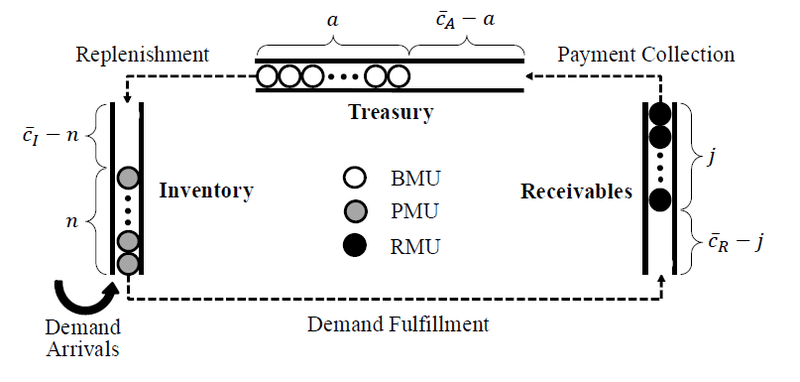
A Markov Renewal Model for Valuating Cash Conversion Systems
Valuing a new product or product line is difficult when there is no financial history to rely on. This project models the cycle through which cash is invested in inventory, converted into sales, and collected as payments, and uses it to value such systems from their operational and financial parameters.

Optimizing Order Assignments in On-Demand Delivery with Behavior Heterogeneity of Crowdsourced Drivers
On-demand delivery platforms assign orders assuming drivers will follow the plan, but crowdsourced drivers often behave differently from one another and from what the platform expects. This project develops an order assignment approach that takes these behavioral differences into account, combining prediction of driver behavior with optimization.

Balancing Workforce Fissuring and Service Quality: Evidence from Dialysis Operations
Dialysis facilities increasingly rely on contract nurses alongside their own staff. This empirical project uses public data on U.S. dialysis facilities to examine how this staffing practice relates to service quality.
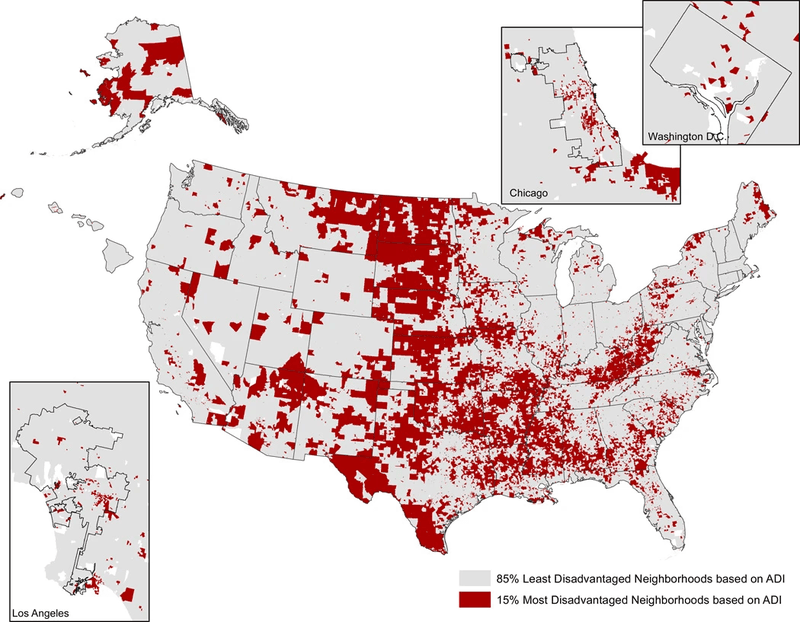
Enhancing Healthcare Operations in Disadvantaged Communities: The Role of Chain Affiliation and Dynamic Capabilities
Healthcare facilities in socially disadvantaged communities often face quality gaps. This empirical project uses data on U.S. dialysis facilities to examine whether chain affiliation helps narrow those gaps.
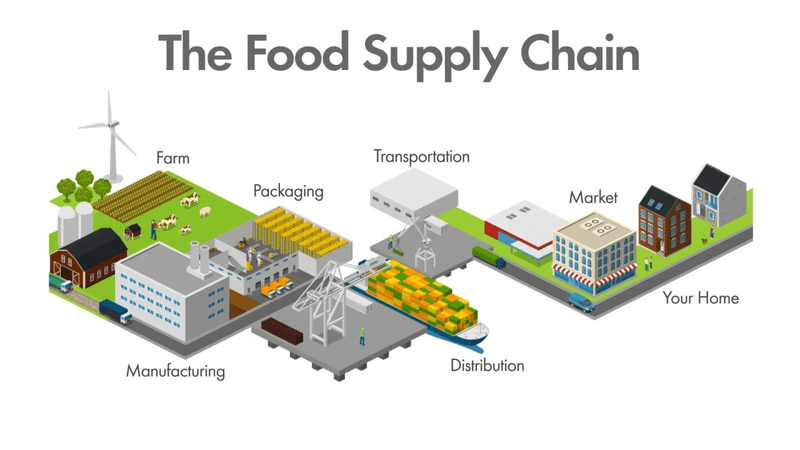
Learning-to-Optimization: A Graph-Structured Decision Framework for Food Safety
Food safety regulators have limited inspection resources. This early-stage project explores how predicting where risks are likely to arise can be combined with decisions about what to inspect.

Oversupply of Fissured Workforce and Operational Inefficiency: Evidence from Grab-Mode Competition in Food Delivery
Food delivery platforms assign orders to couriers in two main ways. In dispatch mode, the platform's algorithm assigns each order to a courier; in grab mode, crowdsourced couriers compete to pick the orders they want. This project asks how grab-mode competition affects delivery performance when couriers are abundant relative to orders. The core idea is that when there are many couriers per order, couriers rush to grab whatever is available in order to secure income, leaving little time to judge whether an order suits them or to plan their route. We hypothesize that (1) a higher courier-to-order ratio shortens the time it takes for an order to be grabbed, and (2) shorter grab times lead to longer delivery delays. The analysis uses data from Meituan, one of the largest food delivery platforms in China, covering over 650,000 orders. Because the data only record which courier took which order, local courier density is not directly observed. We estimate it by reconstructing where couriers were over time from their recorded locations and mapping them onto a grid of the city; checked against a limited sample of actual candidate-courier records, the estimate fits closely (R² = 0.988). The data are then organized as a panel by grid cell and hour, and the effect of grab time on delay is estimated by two-stage least squares, using courier density as an instrument for grab time. The results support both hypotheses: an oversupply of couriers reduces order acceptance time but increases delivery delays. Rapid grabbing appears to reflect competitive pressure rather than operational readiness. For platform design, this suggests moderating competition where couriers are dense and giving couriers time to assess orders before accepting. More broadly, abundant labor without coordination degrades performance rather than adding resilience.